Sunday, October 3, 2010

Let Me In Review

Rated R (Strong Bloody Horror Violence, Language and a Brief Sexual Situation)

Running Time: 1 Hour & 55 Minutes

Cast-
Kodi Smit-McPhee-Owen
Chloë Grace Moretz-Abby
Richard Jenkins-The Father
Elias Koteas-The Detective
Cara Buono-Owen's Mother
Sasha Barrese-Virginia
Dylan Kenin-Larry
Ritchie Coster-Mr. Zoric
Dylan Minnette-Kenny
Jimmy 'Jax' Pinchak-Mark
Nicolai Dorian-Donald
Brett DelBuono-Kenny's Brother
Chris Browning-Jack

Directed by Matt Reeves

Chloë Grace Moretz stars in Matt Reeves' "Let Me In," a remake of the 2008 Swedish film "Let the Right One In."
Around the time of the release of the original “Twilight” in 2008, there was another vampire film in limited release called “Låt den Rätte Komma In” or translated “Let the Right One In,” based upon the 2004 novel of the same name by John Ajvide Lindqvist. The Swedish film received widespread critical acclaim due to its effective blend of ‘scares with intelligent storytelling’ and currently holds a 97% on Rotten Tomatoes. Since Hollywood can’t leave well enough alone, they’ve decided to remake the film for an American audience. The renamed “Let Me In” largely follows the general plot of the original with some subtle changes but despite playing second fiddle, this is an oddly sad and poignant horror romance which owes much to the strength of the source material. One of the best vampire films I've ever had the pleasure to see, director Matt Reeves has crafted a remake that does not sacrifice the integrity of the original to pander to a more mainstream audience and for that, I applaud him for keeping his promise.

Set in Los Alamos, New Mexico in 1983, a lonely twelve-year old boy named Owen (Kodi Smit-McPhee) is bullied at school while his parents are going through a divorce. With no friends, he spends his time spying on his neighbors until one night, a strange barefoot girl named Abby (Chloë Grace Moretz) moves into the apartment next door with her ‘father’ (Richard Jenkins). Owen is naturally drawn to Abby as she seems to be impervious to the cold and the two quickly strike up a friendship, as she offers him advice on how to fight back against his tormentors and communicating through the wall of their apartments with Morse code. Although Abby possesses the physical appearance of a twelve-year old girl, she is actually an ancient vampire that needs to consume human blood to survive, which is provided by her elderly companion who goes out every night to kidnap teenagers and drain them of their blood. These killings attract the attention of a detective (Elias Koteas), who suspects it to be the work of a satanic cult.

The title “Let Me In” is a reference to vampire folklore which states that a vampire cannot enter a person’s residence without being invited in first. Although fans of the original Swedish version may decry the changes, they are minor at best with the ambiguity of Abby/Eli’s gender removed and the relationship with the father made more palatable for American audiences but no less disturbing. The driving force between Owen and Abby is that the two suffer from extreme loneliness. His relationship with his mother is distant at best and Reeves films her in such a way that her features are blurred and indiscernible. Owen is desperate for any sort of human connection and becomes excited at the prospect of having a friend like Abby. Being twelve and at the cusp of puberty, he is unable to articulate his feelings but the bond he shares with Abby transcends a label such as love. To make it ‘official,’ Abby shows up in Owen’s room one night and sleeps with him unclothed. Obviously, there is no sex involved but it’s not all that hard to read between the lines. As for Abby and her older guardian, their relationship could be likened to that of a ‘long-time wedded couple who have grown apart during the many years they have spent together’ (James Berardinelli, ReelViews). When he fails to provide her with human blood, he wearily remarks that perhaps he wants to be caught and feeling left behind, requests that Abby stop seeing ‘the boy.’ I overheard one of the audience members remark that Abby was essentially using the boys she befriends to help her procure blood. While that’s a more cynical interpretation, I don’t believe that’s true. Being immortal, it’s only natural that Abby will come to grow weary and seek new companionship.

Reeves has chosen his two leads well and both bring a surprising level of maturity and talent to a film which could’ve been sanitized to make a quick buck. Kodi Smit-McPhee’s (last seen in 2009’s “The Road”) melancholy performance makes us empathize with his lonely existence as he lives in fear of being brutalized at school but comes into his own as he spends more time with Abby. He is initially shocked when he discovers that she is not what she appears to be and although we can tell that he is unable to come to terms with her violent nature, the fact that he cares for her and she for him overcomes any doubts that he may have had. Like “Kick-Ass,” the real star is Chloë Grace Moretz and she is quickly becoming a favorite amongst genre fans. Her Abby is vicious but she is also brave and confident, having accepted that her life is a constant battle for survival and that the only way to make this burden easier to have someone to spend her time with. Richard Jenkins only has a few lines of dialogue but how he came to know Abby is revealed in a key scene when Owen sees a faded photograph. Finally, there’s Elias Koteas as a detective who’s in way over his head and cannot fathom the horror that awaits him.

“Let Me In” doesn’t hold back with the gore as these aren’t your normal, everyday vampires that sparkle in the daylight. When Abby assumes her vampire form, her eyes glow a bright blue and takes on a discolored complexion, with her voice becoming an inhuman growl. She becomes little more than an animal when she feeds and in the film’s final scene, she eviscerates all of Owen’s attackers in a shower of severed limbs. The only weakness is the CGI but since it is used sparingly, it does not detract from the film.

“Let Me In” was released on October 1, 2010 and has received positive reviews with 88% on Rotten Tomatoes. Critics hailed it as the rare successful remake that has 'enough changes to stand on its own' without adding 'insult to inspiration.' The film competed with David Fincher’s “The Social Network” which took the number one spot with an estimated $23 million and although I had pegged this film to come in second, it flopped at the box office, coming in at a shockingly low eighth place with a paltry $5 million. Audience reaction was positive but a few muttered that the film was boring and openly mocked some of the more touching scenes. Granted, some may find the content disturbing or ‘wrong’ but mainstream American society is often way too uptight. “Let Me In” is an excellent vampire romance film and one could say that given their circumstances, Owen and Abby were destined to be together. This is the high standard that all remakes should set for themselves.

Final Rating: 5 out of 5

"Do you think...there's such a thing as evil?"

The Social Network Review

Rated PG-13 (Sexual Content, Drug and Alcohol Use and Language)

Running Time: 2 Hours

Cast-
Jesse Eisenberg-Mark Zuckerberg
Andrew Garfield-Eduardo Saverin
Justin Timberlake-Sean Parker
Armie Hammer-Cameron Winklevoss
Josh Pence-Tyler Winklevoss
Max Minghella-Divya Narendra
Patrick Mapel-Chris Hughes
Joseph Mazzello-Dustin Moskovitz
Rooney Mara-Erica Albright
Brenda Song-Christy Lee
Rashida Jones-Marylin Delpy
Dakota Johnson-Amelia Ritter
Douglas Urbanski-Larry Summers
Wallace Langham-Peter Thiel
Bryan Barter-Billy Olson
Steve Sires-Bill Gates

Directed by David Fincher

"Did I adequately answer your condescending question?"
When we look back through the last ten years, one of the most defining attributes is the rise of the social networking site and in particular, Facebook, which currently boasts over five hundred million active users as of July, 2010. Facebook was launched in 2004 by Mark Zuckerberg, Eduardo Saverin, Chris Hughes, and Dustin Moskovitz in a Harvard dorm room but the journey toward the site that we know and use today is a sordid tale of lost friendships, greed, and betrayal as recounted in Ben Mezrich’s 2009 nonfiction book, The Accidental Billionaires. David Fincher’s latest film “The Social Network” recounts the tumultuous first years of Facebook’s founding and the resulting lawsuits that followed. However, do not mistake this for a documentary. As it takes inspiration from Mezrich’s book, where Saverin served as a consultant, the details are skewed against Zuckerberg’s favor yet no one can deny his ambition and genius. “The Social Network” is a highly engrossing picture that boasts amazing writing and direction but it’s the excellent performances that cements its status as one of the best, if not the best, film of 2010.

Mark Zuckerberg (Jesse Eisenberg), a Harvard University student, is having dinner with his girlfriend Erica Albright (Rooney Mara) where he reveals his desire to join an exclusive Final Club but she breaks up with him when he unintentionally insults her about sleeping with the doorman and going to Boston University, which he feels is less academically rigorous. Afterward, Mark rushes back to his dorm room and begins to write an insulting blog post against Erica on his LiveJournal account while drunk. Inspired by an offhand comment from one of his roommates, he begins to write the code for a website dubbed ‘FaceMash,’ which allows users to rate the attractiveness of the student female body at Harvard. Since there is no unified directory of all of Harvard’s students and their photos, he hacks into the databases of various residence halls to download the information. The site goes live once Eduardo Saverin (Andrew Garfield), Zuckerberg’s best (and only) friend supplies him with a special algorithm. FaceMash becomes highly popular with over 22,000 hits overnight, causing the entire Harvard network to crash. Zuckerberg is brought before the Administrative Review Board and is put on six months academic probation for violating privacy and disrupting security. The creation of FaceMash catches the attention of Cameron and Tyler Winklevoss (Armie Hammer, Josh Pence), and their business partner Divya Narendra (Max Minghella) who meet with Zuckerberg about having him work on a social networking site called Harvard Connection, which will be exclusive to Harvard students with people joining through invitation only. Zuckerberg agrees but goes off on his own to create ‘The Facebook,’ with his friend Eduardo putting up $1000 to start the site. When Facebook finally goes live, the site quickly becomes popular and angers the Winklevoss’, who believe that Zuckerberg had stolen their idea. They eventually sue him for theft of intellectual property. As Facebook expands to more universities, Napster founder Sean Parker (Justin Timberlake) wants in on the action, driving a wedge between Zuckerberg and Eduardo. Facebook soon becomes a full-fledged company with the backing of various investors but as the site is about to reach its one millionth subscriber, Eduardo realizes that his share of the company has been reduced from 30% to less than 1%. Furious, he decides to sue his former best friend.

“The Social Network” offers a more-or-less accurate account of the founding of Facebook and the lawsuits that followed during the period of October, 2003 to September, 2005, but keep in mind that it does take liberties for dramatic effect. The film is presented as a series of flashbacks while Zuckerberg is involved in two separate lawsuit depositions where he stands accused of cheating his best friend and committing theft of intellectual property. Although we don’t know whether the film’s version of Zuckerberg is true to his real-life counterpart, the character as presented by Fincher and screenwriter Aaron Sorkin is a multi-faceted individual. There is no doubt he is a genius and filled with big ideas. Unfortunately, he lacks humility, coming off as arrogant, over-confident, obsessive, and cold to most of his peers. He lacks the social graces to be accepted and it’s not hard to wonder whether he created Facebook to prove to everyone that the nerd whom everyone vilified at school has become the youngest billionaire ever. While his actions make him out to be total a**hole, there at times where, thanks to Eisenberg’s performance, that he looks on at his best friend that is now suing him with weary and regret. His portrayal of Zuckerberg defies any conventional praise and is deserving of an Oscar nomination. It also helps that the rapid-fire dialogue from Sorkin's script keeps the film's momentum going and at times, darkly comic. Before the credits roll, we're left with an important question: is Zuckerberg really a jerk or is his behavior the product of his own genius? I'll leave that for you to ponder.

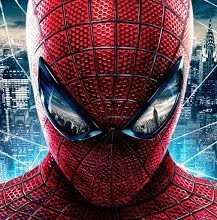
Andrew Garfield’s (our future Amazing Spider-Man) Eduardo Saverin is a devoted friend who manages to put up with Zuckerberg’s idiosyncrasies, much like Wilson and Dr. House on the FOX television show. As Facebook continues to expand at an exponential rate, Saverin wants Facebook to start generating revenue through advertising since he is the CFO with a 30% stake but Zuckerberg refuses because he feels it would ruin the ‘cool’ factor and exclusivity of the site. He gets pushed further into the background once the founder of Napster, Sean Parker, whom Justin Timberlake portrays as a Faustian character, enters the scene and eventually his ownership in Facebook gets reduced to virtually nothing. Part of the blame lies on Saverin because he didn’t fully read the contracts before signing as he got caught up with the excitement of the site going fully incorporated. Like Eisenberg, Garfield’s Saverin is also full of regret that it had to come to this. It represents a prime example of how money and greed combined with the cutthroat world of online business ventures can destroy even the strongest of friendships. Timberlake defies all expectations and turns in a fine performance as Sean Parker, charming Zuckerberg with the promise of billions of dollars but at the cost of his own integrity.

There is no denying that Facebook has changed the way we communicate but while it has brought millions of people together, it has also driven them apart as they eschew physical interaction. The anonymity that the Internet brings has allowed people to create a persona in which it was not possible or acceptable in the real world. Let’s be real here, Facebook is an absolute useless tool, an addictive time waster but Zuckerberg created it to take the ‘entire social experience of college and putting it online.’ People are naturally curious about other people. They want to know what kind of friends they have, if they’re in a relationship or not and Facebook provides that. Yet all this is really on the surface in “The Social Network” and at its core, it’s about a friendship lost. ‘You don’t get to 500 million friends without making a few enemies.’ Never has a tagline been so appropriate.

“The Social Network” was released into theaters on October 1, 2010 to critical acclaim with a whopping 97% on Rotten Tomatoes, making it one of the few highly rated films of 2010. Critics called it ‘impeccably scripted, beautifully directed, and filled with fine performances, [the film] is a riveting, ambitious example of modern filmmaking at its finest.’ As it is one of most anticipated films of the fall, it should have no problem coming in number one at the box office with an estimated $25 to $30 million. A Best Picture and Best Director nomination at the Academy Awards is a no-brainer at this point and it is well-deserved as this is as good as films come. With “The Social Network,” David Fincher has crafted a crowning masterpiece that takes themes as old as time itself: friendship and betrayal, and marries them with the electronic interconnectivity of the world that we live in such a way that ‘defines the dark irony of the past decade’ (Peter Travers, Rolling Stone).

Final Rating: 5 out of 5

"I think if your clients want to sit on my shoulders and call themselves tall, they have the right to give it a try, but there's no requirement that I enjoy sitting here listening to people lie. You have part of my attention; you have the minimum amount. The rest of my attention is back at the offices of Facebook, where my colleagues and I are doing things that no one in this room, including and especially your clients, are intellectually or creatively capable of doing. Did I adequately answer your condescending question?"

Saturday, August 14, 2010

The Expendables Review

Rated R (Strong Action and Bloody Violence Throughout, and for Some Language)

Running Time: 1 Hour & 43 Minutes

Cast-
Sylvester Stallone-Barney Ross
Jason Statham-Lee Christmas
Jet Li-Yin Yang
Dolph Lundgren-Gunner Jensen
Randy Couture-Toll Road
Terry Crews-Hale Caesar
Mickey Rourke-Tool
Eric Roberts-James Munroe
Steve Austin-Dan Paine
David Zayas-General Garza
Giselle Itié-Sandra
Charisma Carpenter-Lacy
Bruce Willis-Mr. Church
Arnold Schwarzenegger-Trench

Directed by Sylvester Stallone

Sylvester Stallone tries to reclaim his action hero glory in "The Expendables."
As the summer movie season winds down, we have one last highly anticipated film, "The Expendables," an ensemble action film that pays homage to the blockbuster action flicks of the 1980s and early 1990s. Sylvester Stallone (who both stars and directs) has gathered an impressive cast that would make any action junkie salivate, but unfortunately, the whole affair frankly comes off as stupid. While the story provides a good enough excuse for a bunch of men to blow stuff up, the dialogue is excruciating, and the violence so pointless and numb-inducing that a more appropriate name for this film would be “Things Blow Up Until You Go Deaf and Your IQ Drops 200 Points." Take away the big-name cast and what you have here would barely qualify as a straight-to-DVD release.

Barney Ross (Sylvester Stallone) leads a group of mercenaries dubbed 'The Expendables,' whose members include former SAS agent Lee Christmas (Jason Statham), martial artist Yin Yang (Jet Li), heavy weapons-wielder Hale Caesar (Terry Crews), Toll Road (Randy Couture) and drug-addled Gunner Jensen (Dolph Lundgren). After putting down a group of Somali pirates, Gunner gets into an altercation with Barney and attacks Yin, leading to his expulsion from the team. Back in the US, former Expendables member Tool (Mickey Rourke) sets up a meeting between the mysterious Mr. Church (Bruce Willis) and a former rival of Barney's named Trench (Arnold Schwarzenegger). Church wants a ruthless dictator, General Garza (David Zayas) of the (fictional) island nation of Vilena, out of the picture but Trench declines the job, citing that he is 'too busy.' Barney accepts and prepares for the mission by doing recon work with Lee. They meet their contact, the beautiful Sandra (Gisele Itié), whom Barney immediately becomes smitten with. When the General's soldiers suddenly attack, the three are forced to make an explosive escape. However, Sandra refuses to leave as she is determined to help her people. Her dedication gives Barney an epiphany and he decides to complete the job not for the money but to do what is right. He, along with the rest of the Expendables, lay siege to the General's mansion in order to brings his accomplice, a rogue CIA agent named James Munroe (Eric Roberts), to justice.

The plot of "The Expendables" is nothing more than a flimsy excuse to cause some mayhem, and it succeeds for the most part. Yet, it could've been something much more as there's one scene where Rourke's character tearfully laments about how senseless violence can damage a man's soul and make him numb to other people's suffering. This is as close to the film gets to providing some semblance of meaning but it is gone all too soon because apparently, emotion has no place in a macho-man flick like this. Hell, everyone might as well be in a d*ck-measuring contest since all the characters are obsessed with trying to prove how 'manly' they are. At one point, Lee visits his former girlfriend Lacy (Charisma Carpenter) and finds out that her new boyfriend is physically abusive towards her. To show that he's a 'man,' he goes off and beats the crap out of him because that's how chivalrous he is. The dialogue is atrocious, which is a given since Stallone has a story credit. It's full of male posturing and action movie clichés that we've all seen before, making the whole affair generic and predictable. As for the much-hyped scene with Stallone, Willis, and Schwarzenegger, it barely lasts five minutes and while it provides a few chuckles, it all feels rather anti-climactic given how much focus this moment was in the trailers. Character development is nil because no one needs that in a film like this and audiences looking for that are apparently not man enough to see "The Expendables." Given the amount of talent that Stallone was working with, it all just feels like a missed opportunity.

The acting mostly consists of the cast members shouting all their lines, with Mickey Rourke being the sole actor to deliver an actual performance. The only people given any significant screen-time are Stallone, Statham, and Li. The others don't even show up until the last thirty minutes, not enough time to flesh out their paper-thin, steroid-infused personalities. Also, why is Li's character named Yin Yang? They couldn't think of something better so resorted to the most stereotypical Asian name possible? Finally, the main villain—played by Eric Roberts—hams it up in a performance fit for a straight-to-DVD flick.

As for the action scenes, it'll leave you brain-dead and deaf at the same time as explosion upon deafening explosion is piled on top of each other. The violence comes close to approaching self-parody as limbs are blown off, snapped off, and shot off. The final thirty minutes are a mess. It's often hard to tell who is shooting at whom due to the haphazard, vomit-inducing editing. It might make Michael Bay proud but since we're not emotionally invested in what's happening, why should we even care? Watching Stallone huff and puff as he runs to catch a small airplane while getting shot at by dozens of faceless men, it seems like he's running to reclaim his former action hero glory. Let's be realistic here, this guy is one year away from qualifying for a monthly Social Security check.

"The Expendables" was released into theaters on August 13, 2010 and has received mixed reviews with 44% on Rotten Tomatoes. Critics noted that 'it makes good on the old-school action it promises, but given all the talent on display, [the film] should hit harder.' Audience reception was largely enthusiastic as they whooped and cheered at all the over-the-top violence on display. Given the buzz around the film, I'm predicting a $30 to $35 million opening weekend unless "Eat Pray Love" surprises since there hasn't been a hit movie for female audiences this summer. "Scott Pilgrim vs. The World" is only going to appeal to a niche audience despite the fact that it has the best reviews out of this weekend's new releases. "The Expendables" is a futile attempt to reclaim the glory of a bygone era and while it's fun to see all these action stars on-screen, the novelty soon wears off as there's nothing here remotely worth watching. The dialogue is cringe-inducing and the violence is just so loud and mindless that it's liable to cause brain damage and your ears to bleed. This is nothing but a straight-to-DVD film with a (mostly) all-star cast.

Final Rating: 1.5 out of 5

"I promised myself, I'm gonna die for something that counts."

Saturday, July 17, 2010

Inception - The IMAX Experience Review

Rated PG-13 (Sequences of Violence and Action Throughout)

Running Time: 2 Hours & 28 Minutes

Cast-
Leonardo DiCaprio-Dom Cobb
Joseph Gordon-Levitt-Arthur
Ellen Page-Ariadne
Tom Hardy-Eames
Ken Watanabe-Saito
Cillian Murphy-Robert Fischer Jr.
Marion Cotillard-Mallorie 'Mal' Cobb
Dileep Rao-Yusuf
Michael Caine-Miles
Tom Berenger-Peter Browning
Pete Postlethwaite-Maurice Fischer
Lukas Haas-Nash
Tai-Li Lee-Tadashi

Directed by Christopher Nolan

One of the finest action scenes ever committed to film.
‘There's one thing you should know about me. I specialize in a very specific type of security…subconscious security.’ With the exception of a handful of films, many of this summer’s releases have either been forgettable or outright disappointments. Now, Christopher Nolan unleashes his sci-fi thriller “Inception” and it is nothing short of a mind-blowing cinematic experience. His usual trademarks—which include non-linear storytelling and psychological themes—have come to define the British auteur's work, making him one of the most acclaimed filmmakers of our time. 1996’s “Following” was his feature debut but it wasn’t until the cult hit “Memento” in 2000 that he started gaining fame. Since then he’s proved unstoppable. 2008's “The Dark Knight” was pretty much guaranteed to make big bucks at the worldwide box office yet no one could have predicted the impact it would have on the superhero genre. Nolan’s latest requires two things that are sorely lacking in today’s audience: attention and the willingness to actually think. This is the only way that you will understand the film but even then you still won’t grasp all the nuances, at least not on a first viewing. Is it too smart for the mainstream viewer? No, absolutely not and for the most part this is the director’s most linear work by far. Despite the copious amounts of action scenes, Nolan is not here to provide mere entertainment. He wants us to discuss and analyze everything about his film and I have no doubt in my mind that after the end credits roll, people will dissect every scene for years to come. In creating a wildly original and difficult idea, he has exceeded all of our expectations.

In the near future, a new type of corporate espionage has emerged where people skilled in the art of 'extraction' invade the dreams of the rich and powerful in order to steal their secrets and sell them to the highest bidder. The best is Dom Cobb (Leonardo DiCaprio) and his point man, Arthur (Joseph Gordon-Levitt) but after a botched extraction inside the mind of Japanese businessman Saito (Ken Watanabe), they are forced to go on the run. Unfortunately, Saito confronts them and reveals the he knew what they were trying to do as it was all an audition for a special job he had in mind. He wants Cobb to perform an 'inception' where he will plant an idea into the mind of Robert Fischer Jr. (Cillian Murphy), the son of a late corporate rival. If the job is a success, Saito will pull some strings to allow Cobb to return home to his children in the United States. Although an inception is believed to be impossible, Cobb is adamant that he can do it because he has done it before. With Arthur, he gathers a team that includes Ariadne (Ellen Page), the architect that will construct the world of the dream, Eames (Tom Hardy), a forger that can assume any identity within a dream, and Yusuf (Dileep Rao), a chemist who will produce a powerful enough compound that will allow the team to go deep enough into the subconscious to plant the idea. However, Cobb is haunted by images of his deceased wife, Mallorie (Marion Cotillard), which puts extreme risk on both the mission and the team.

“Inception” is incredibly difficult to describe in words but in rough, simple terms it boils down to being a heist film. The first half establishes the rules of the dream-world and our anchor is Ariadne. Anything is possible in constructing the dream, where the laws of reality and physics can be subverted. However, the more you manipulate the dream, the more that person’s 'projections'—physical representations of the subconscious—notice and try to drive you out, much as a white blood cell drives out foreign objects in your body. Dying in the dream merely wakes a person up but as you go deeper into the mind, death ends up trapping you in some sort of limbo, a state where you can no longer discern what is and what isn’t real. Escape is only possible through sheer willpower. In order to keep a person in touch with reality, he or she will hold a personal ‘totem’ that serves as a reminder that what they are seeing in the mind is not real. To escape from the dream, you need a ‘kick’ which is a stimulus that ranges from a simple smack to the face to falling into a tub of cold water (or a rain drenched river). What happens outside of the dream is manifested in logical ways such as falling through the air produces a weightless environment. While all this is told to the viewer, it never feels as if Nolan is pandering to the lowest common denominator and you do have to use that brain of yours to grasp what is being shown, especially when there are dreams-within-dreams all interacting with each other. Aspects of time and reality are also explored as mere hours in the real world can span decades in the subconscious.

While all this can feel like a bunch of psychological mumbo-jumbo, Nolan knows that the subconscious often harbors guilt or regret and this provides the necessary emotional depth that allows the viewer to identify what Cobb is going through. Due to an unknown tragedy that the story slowly reveals, his wife Mallorie took her own life and Cobb feels responsible. In a shared dream-state, the character's guilt uncontrollably manifests as his two children (always without their faces revealed) or his wife, who is locked away in a prison deep in his mind, but sometimes escapes to disrupt and kill anyone shared in her husband’s subconscious. Perhaps the scene that will invite the most intense scrutiny is the ending, which is left ambiguous to the viewer. I won’t reveal what happens but it might leave some viewers dissatisfied with the lack of proper closure. Still, not everything needs to have a definitive ending in a pretty bowtie as some stories just work better it leaves something to the imagination.

Always impressive is the cast that Nolan manages to bring together for his films and he has assembled an excellent team of thespians. It’s amazing how Leonardo DiCaprio has grown from being just another pretty face to one of the most serious actors working today. As Dom Cobb, the conflict his character must resolve is similar to Teddy Daniels from Martin Scorsese's “Shutter Island.” Dom bears the full weight of his guilt like Atlas holds up the heavens but he is unwilling to come to terms and face it. To succeed in the job and see his children again, he has to confront why he did what he did in order to move on. The rest of the cast deliver strong performances, even if their roles aren’t as developed beyond their functions in the story. Joseph Gordon-Levitt is the point man, Arthur, who shares a friendly rivalry with the suave Eames, played by Tom Hardy. You may recognize him as Praetor Shinzon from 2002's “Star Trek: Nemesis.” Ellen Page serves as our window to how the dream-world operates as college student Ariadne. Cillian Murphy's role as Robert Fisher Jr. provides one of the film's clever twists, where Cobb’s team uses the strained relationship the character shares with his father to fake his epiphany. Cobb’s deceased wife Mallorie is played by Marion Cotillard, who is obsessed with trying to keep her husband trapped in limbo for reasons unknown. Ken Watanabe is Saito, a greedy captain of industry who's out to ruin another man’s life. Playing small roles are Michael Caine as Miles, Cobb’s former mentor, and Tom Berenger as Robert’s godfather, Peter Browning.

The action in “Inception” can best be described as bearing a similarity to “The Matrix.” The mind can apparently be trained to mentally fight off invaders, which is manifested as gun-toting mercenaries. There’s an intense car chase through a rain drenched street that continues throughout the film but the highlight is by far the heavily-advertised zero gravity fight between Arthur and Fisher’s projections. By the end, Nolan is juggling four concurrent dream-states: the car chase, Arthur in the hotel, the large shootout at a snowy base at the top of a mountain, and the apocalyptic limbo that Cobb’s wife inhabits. Any other director would’ve botched it but all of it comes together and feels in sync—like a symphony. The use of CG is kept to an absolute minimum while Hans Zimmer delivers with another excellent score.

“Inception” was released on July 16, 2010 in conventional and IMAX theaters. Reception has been positive with 86% on Rotten Tomatoes. Barring a few contrarians (like Armond White), critics called it ‘smart, innovative and thrilling…that rare summer blockbuster that succeeds viscerally as well as intellectually.’ In his review, Roger Ebert writes that ‘the movies often seem to come from the recycling bin these days: sequels, remakes, franchises. Inception does a difficult thing. It is wholly original, cut from new cloth, and yet structured with action movie basics so it feels like it makes more sense than (quite possibly) it does.’ Christopher Nolan loves making films and the reason why people love him is because he engages the audience in an intelligent manner while his detractors just fumble around struggling to grasp his concepts. He is not here to provide just entertainment but to make you think and this is why I watch movies, because it is not enough to just throw millions of dollars at a bunch of CG effects. A film should make you dissect what the director is trying to convey. That’s not to say that there’s no place for mindless flicks but there’s a reason why a feature like “Inception” is critically acclaimed. With that in mind, run and go see “Inception” because I doubt anyone would come as close to exploring dreams the way Christopher Nolan has. With Hollywood plagued by unoriginality and obsessed with making a profit, this is the only man left who is willing to take the risks necessary to tell an engaging story.

Final Rating: 5 out of 5

"Dreams feel real while we're in them. It's only when we wake up that we realize something was actually strange."

Monday, July 12, 2010

Despicable Me 3D Review

Rated PG (Rude Humor and Mild Action)

Running Time: 1 Hour & 35 Minutes

Cast (voice):
Steve Carell-Gru
Jason Segel-Vector
Russell Brand-Dr. Nefario
Miranda Cosgrove-Margo
Dana Gaier-Edith
Elsie Fisher-Agnes
Will Arnett-Mr. Perkins
Kristen Wiig-Miss Hattie
Julie Andrews-Gru's Mother
Jack McBrayer-Carnival Barker/Tourist Dad

Directed by Pierre Coffin and Chris Renaud
You will rue the day that you crossed Gru and his Minions!
When it comes to animation studios, Pixar and DreamWorks Animation dominate the industry but newcomer Universal Pictures enters the fray with their own studio, Illumination Entertainment, founded by Chris Meledandri, who was a former executive at 20th Century Fox Animation for eight years and supervised/produced the popular “Ice Age” franchise. Their first film is “Despicable Me” and there’s a lot at stake for the fledgling studio considering that this is an original feature with no built-in audience so there's a lot of risk involved. Well, it looks like their gamble paid off and although “Despicable Me” does not approach the technical brilliance or the emotional resonance of Pixar, the film is still a hilarious, heartwarming tale with memorable (and cute!) characters that adults and kids can enjoy.

Gru (Steve Carell) is a villain living in a black, foreboding home in a quiet suburban neighborhood. He uses his trusty Freeze Ray to skip the line at the coffee shop and his exploits include stealing the Times Square Jumbotron and the Statue of Liberty replica from Las Vegas. With his good friend, Dr. Nefario (Russell Brand) and a legion of yellow, pea-sized Minions, Gru plans for his most ambitious crime yet and take the crown as world’s #1 villain by stealing the Moon with a Shrink Ray Gun. Unfortunately, he lacks the necessary funds to build the rocket ship and the local Bank of Evil refuses to give him another loan unless he first obtains the Shrink Ray. Gru travels to a secret laboratory in East Asia and successfully steals the device but an up-and-coming villain named Vector (Jason Segal) swipes it from him. Vector has made a name for himself by stealing the Great Pyramid and replacing it with an inflatable replica. The Shrink Ray is hidden in Vector’s impregnable fortress, and despite numerous attempts, Gru fails to infiltrate it. However, he sees a group of little girls selling cookies and they managed to get in without any problems. The girls, named Margo (Miranda Cosgrove), Edith (Dana Gaier), and Agnes (Elsie Fisher) have no parents and live at an orphanage. To help him gain entrance to Vector’s fortress, Gru decides to adopt them but begins to feel conflicted when his new daughters begin to melt his icy heart.

“Despicable Me” features a very by-the-numbers and predictable redemptive plot but what saves it from being another run-of-the-mill animated flick is the confident writing and the characters. Much of the focus is on Gru bonding with his adopted daughters rather than the rivalry between him and Vector. The film is ultimately about acceptance as flashbacks reveal that Gru had big dreams of reaching the moon as an astronaut when he was a child but his mother did little to encourage this, even when he built a prototype rocket ship (based on his macaroni design!). As a villain, Gru wants to be known as the best of the best and have the world look up to him but his exploits are rather small scale and second-rate. Likewise, the girls he adopts are also looking to be accepted into a new family and despite Gru’s initial coldness, they remain optimistic, especially the adorable Agnes. As he spends time with them, Gru begins to find his priorities shift and ultimately learns that he wasn’t born to be the greatest villain but to be the perfect father. In a way, Gru reminds me of the Grinch in that a child helps inspire and transform them into good people. Heavier themes involving adoption and orphans feeling unwanted are glossed over and the film maintains a cheerful, irreverent tone. This is not an inspired tale but children and their parents can easily understand and relate to it. 

“Despicable Me” is full of hilarious gags and characters, with the Minions front and center in Universal’s marketing campaign. The Minions speak in fast gibberish and resemble corn kernels with overalls and one or two big eyes. They are obedient but don’t exactly do much work besides being guinea pigs for Nefario’s inventions (which include a Fart Gun) and cheering Gru on. Apparently to translate and understand what they're saying during the end credits, you need some Best Buy tie-in app for your mobile phone. Some gags borrow from Pixar such as the Box of Shame (Cone of Shame from “Up”), which is literally a cardboard box with “Box of Shame” written on it. There are also several in-jokes that only adults will get, such as the Bank of Evil was formerly Lehman Brothers. This drew a lot of laughs from the parents in the audience. The most memorable characters have to be the girls themselves and the littlest one, Agnes, steals every scene with her big cute eyes and ridiculous love for fluffy unicorns. At the amusement park, she sees a unicorn doll and squeals, ‘IT’S SO FLUFFY, I’M GONNA DIE!’ Each girl is distinguished by a certain personality with Margo being the responsible one, serving as caretaker for her younger sisters and Edith as the sullen, less trustworthy type. As for Agnes, if you don't love her then I must question whether you have a heart at all. The CG animation looks smooth and fluid but lacks the impeccable detail from Pixar’s work. Still, the simple colors and style make it pleasing to the eye. The 3D is not as 'eye-popping' as promised and does not add anything substantial to the viewing experience but there is one scene where Gru crash-lands his rocket ship into the streets of his neighborhood that looked rather impressive. 
 
The voice acting is excellent and the cast is composed of SNL veterans or worked with Judd Atapow before. Steve Carrell channels a heavy Eastern European accent that reminds me of Dracula as Gru but along with Russell Brand and Jason Segal, they are virtually unrecognizable from their roles if it weren’t for the opening credits. Will Arnett is the CEO of the Bank of Evil and Kristen Wiig is the orphanage’s greedy mistress, Miss Hattie. Voicing Margo, the oldest sister, is Miranda Cosgrove and some may recognize her from the popular Nickelodeon show, “iCarly.” The middle sister, Edith, is voiced by Dana Gaier and the youngest, Agnes, by Elsie Fisher.

“Despicable Me” was released on July 9, 2010 and received largely positive reviews with a solid 80% on Rotten Tomatoes. Critics noted that it borrowed heavily from Looney Tunes and Pixar but still found the film to be a ‘thoughtful, family-friendly treat with a few surprises of its own.’ Many box office analysts predicted it to come in #1 at the box office but its opening weekend gross of $60 million blew away all expectations for an original property. This success can be attributed to the smart marketing campaign that focused on Gru’s wacky Minions. The theater was mostly composed of parents with their children as expected and everyone seemed to enjoy the film thoroughly. “Despicable Me” may lack originality and the wide range appeal of Pixar’s beloved animated films but it makes up for it with hilarious jokes, cute characters and a heartwarming message.

Final Rating: 4 out of 5

"IT'S SO FLUFFY, I'M GONNA DIE!"

Sunday, June 13, 2010

Star Wars: Episode VI - Return of the Jedi Review

Rated PG (Sci-Fi Action Violence)

Running Time: 2 Hours & 15 Minutes

Cast:
Mark Hamill-Luke Skywalker
Carrie Fisher-Princess Leia Organa
Harrison Ford-Han Solo
Billy Dee Williams-Lando Calrissian
Peter Mayhew-Chewbacca
James Earl Jones (voice)-Darth Vader
Ian McDiarmid-Emperor Palpatine
Frank Oz (voice)-Yoda
Anthony Daniels-C-3PO
Kenny Baker-R2-D2
Warwick Davis-Wicket W. Warrick
Tim Rose-Admiral Ackbar
Kenneth Colley-Admiral Firmus Piett
Alec Guinness-Obi-Wan Kenobi
Denis Lawson-Wedge Antilles/Red Leader
Hayden Christensen-Anakin Skywalker

Directed by Richard Marquand

Father and son confront each other in "Return of the Jedi."
George Lucas completed his epic space opera in 1983 with “Star Wars: Episode VI - Return of the Jedi,” though he wasn’t finished with the story yet as evidenced by the prequels. Like “The Empire Strikes Back,” Lucas decided not to helm the film and since he was unable to hire his good friend Steven Spielberg after leaving the Director’s Guild of America, he settled for Welsh director Richard Marquand. Episode V was a hard act to follow and as expected, Lucas wasn’t up to the task. This is by no means an indication that the film is terrible, in fact it is an excellent and dramatically satisfying conclusion to a franchise that have touched the hearts and minds of many and changed American cinema forever. The main problem of “Return of the Jedi” is the cutesy factor, which is somewhat jarring considering the serious nature of the film. Still, all the plotlines were resolved and Lucas once again ups the ante in special effects, providing one of the most epic space battles to ever grace the silver screen.

One year after the events of “The Empire Strikes Back,” Han Solo (Harrison Ford), still frozen in carbonite, is taken by the fearsome bounty hunter Boba Fett to Jabba the Hutt’s palace on Tatooine. Unwilling to let his friend spend the rest of life as a decoration on a wall, Luke Skywalker (Mark Hamill), now a fully trained Jedi Knight, devises a daring rescue plan along with Princess Leia Organa (Carrie Fisher), Lando Calrissian (Billy Dee Williams), and Chewbacca (Peter Mayhew). Leia, disguised as the bounty hunter Boushh, gains entrance to Jabba’s palace with Chewbacca pretending to be her prisoner. When everyone has fallen asleep that night, Leia frees Han from the carbonite but Jabba wakes up and captures them both. Luke arrives the next day to persuade Jabba to let his friends go or suffer dire consequences. The Hutt refuses to bargain and pressing a button, Luke falls to an underground chamber that is home to a vicious Rancor. Fortunately, Luke lures the beast under the gate of its cage and throws a rock at the button, activating the gate and crushing it. Furious at this turn of events, Jabba decrees that Luke, Han and Chewbacca be tossed into the Great Pit of Carkoon, which is home to a man-eating Sarlacc. Traveling through the Dune Sea on Jabba’s Sail Barge, Luke is forced to walk the plank but not before giving a salute to R2-D2 (Kenny Baker). He suddenly leaps into the air and grabs his newly-constructed lightsaber, throwing everything in chaos. Leia strangles Jabba to death and the rescue attempt is successful. With his friend back, Luke returns to Dagobah to see Jedi Master Yoda (Frank Oz), while Han and Leia meet up with the rest of the Rebel Alliance fleet on Sullust. On Dagobah, Yoda confirms that Darth Vader (voice of James Earl Jones) is Luke's father. With his dying breath, he reminds Luke to remember what he has learned and pass it on to future Jedi. He also reveals that there is another Skywalker but finally succumbs to old age and becomes one with the Force. Meanwhile, the Galactic Empire has built a new, more powerful Death Star in orbit over the forest moon of Endor. Vader and Emperor Palpatine (Ian McDiarmid) arrive via Imperial Shuttle to oversee the final stages of its construction so that they can crush the Rebel Alliance once and for all and turn Luke toward the dark side of the Force. However, the Rebels manage to obtain the schematics of this new Death Star thanks to a group of Bothan spies. Since the battle station is protected by a deflector shield on the surface, Han will lead a strike team to disable it while Lando and Admiral Ackbar (Tim Rose) will lead the main fleet and try to destroy the Death Star by blowing up its main reactor. Luke and Leia accompany Han to destroy the shield generator but run into trouble when they are captured by the planet’s furry natives, called Ewoks. They soon manage to gain their trust thanks to C-3PO, whom the Ewoks believe is a god. As Han prepares to destroy the deflector shield and the Rebel fleet arrives to destroy the new Death Star, Luke confronts his father, Darth Vader, one final time in a desperate attempt to save him from the dark side. He must also contend with the powerful Emperor and destroy him in order to free the galaxy from his iron grip.

Most of the time, the third part in a series ends up being the weakest and this holds true here but I feel “Return of the Jedi” is an underrated film. It was not as terrible as some fans made it out to be and certainly not as bad as the crap we get from Hollywood nowadays. For a brief time, the film used the subtitle “Revenge of the Jedi” as co-writer Lawrence Kasdan felt the original was too weak. However, since Jedi do not take revenge, it was reverted back to “Return of the Jedi” a few weeks before its release. With this final film, Lucas neatly wraps up all the plotlines from both the prequel and original trilogies; Darth Vader finally turns from the dark side and fulfills the prophecy of bringing balance to the Force by destroying the Sith. Whether you like it or not, the prequels have changed the way we analyze the original trilogy because the entire saga revolves around Anakin Skywalker, not Luke. The moment that Vader becomes Anakin once more is reminiscent of his fall in “Revenge of the Sith.” As he watches his son in agony while Palpatine unleashes a torrent of Sith Lightning, he is again faced with a choice. Anakin fell to the dark side because he was unable to accept the fact that his loved ones will eventually die and Palpatine exploited this. Yet this time, he can save his son and in the end, he made the right choice.

However, some of the emotional depth of that moment is taken away by the inclusion of Ewoks. They are pretty much walking teddy bears wielding Stone Age technology. The problem arises when Palpatine says that he sent his ‘best troops’ to stop Han from destroying the deflector shield. How was it even possible for the Ewoks to defeat the legion of Stormtroopers and AT-STs roaming about using nothing but rocks and spears? You could argue that it was perseverance and that the Ewoks had greater numbers but the ground battle on Endor is a little hard to swallow, even by “Star Wars” standards. Originally, Lucas intended to use the Wookies but since they were already technology adept, he created a less advanced race to defeat the Empire. Looking at it pragmatically, the Ewoks were not as annoying as Jar Jar and they ended up being an endearing lot. Another bone of contention is the revelation that Leia is Luke’s twin sister. Some critics felt that Lucas was ‘making it up as he goes along’ and that Leia was not originally intended to have any familial ties to Luke. Others called it a cheap cop-out of the love triangle between Han, Luke, and Leia. Personally, I don’t have an issue with this but it does make the romantic tension in the previous films look, well, incestuous. Once again Lucas lets his imagination run wild with a huge assortment of aliens on-screen in Jabba’s Palace from the dim-witted Gamorrean guards to Sy Snootles and the Max Rebo Band. Many of them only appeared for a split-second and part of the joy of watching “Star Wars” for me is trying to identify as many as I can. Despite its drawbacks, the issues with “Return of the Jedi” are minor compared to Episodes I and II and it remains an amazing film that succeeds in the uneasy task of providing closure to one of the most celebrated science fiction franchises of the past three decades.

The acting is the strongest yet with Mark Hamill as a more mature, confident Luke Skywalker. The Luke we knew from Episodes IV and V would not have devised the daring rescue plan for Han Solo, showing how far he has grown. Carrie Fisher plays a more serious-minded Leia but what most people remember the most is the skimpy slave girl outfit she wore. She briefly became a sex symbol and was immortalized by many male and female nerds, her costume becoming a popular fixture in comic book conventions. Harrison Ford is still cocky and over-confident as Han Solo but he’s now fully committed to the Rebel cause instead of looking out for himself as he did originally. Emperor Palpatine makes his first appearance, played by Ian McDiarmid. With the appearance of a frail old man, he initially does not seem like much of a threat until he unleashes the full extent of his dark side powers at Luke in the final minutes of the film.

Since this is the last film, Lucas brought out all the stops to create as epic an ending as he could and the space battle over Endor is a visual treat. Rebel cruisers face off with Imperial Star Destroyers while X-Wings trade laser blasts with an endless supply of TIE Fighters. Han’s rescue is also impressive as Luke makes short work of Jabba’s guards but the final duel between father and son isn’t very memorable. Granted, Luke didn’t want to fight and acted in self-defense. As in the other films in the original trilogy, changes were introduced in the 1997 re-release and 2004 DVD edition. Major additions include the dance number in Jabba’s Palace with a CG Sy Snootles and Joh Yowza, and the ending, where scenes of celebration on Cloud City, Mos Eisley and Coruscant are shown following the destruction of the second Death Star. For the DVD version, a scene of celebration on Naboo was inserted and the Galactic Senate and Jedi Temple were added in the background on Coruscant. The final scenes of the film were also changed with Hayden Christensen replacing Sebastian Shaw as Anakin Skywalker. This proved controversial with some fans but Lucas’ explained that after Anakin redeemed himself, he returned to his persona before he turned to the dark side when he became one with the Force. Again, the restoration work had color errors with Vader’s lightsaber, which appears pink in some scenes.

“Star Wars: Episode VI - Return of the Jedi” was released on May 25, 1983 to positive reviews but critics agreed that it was the weakest film of the trilogy. The film currently holds 77% on Rotten Tomatoes and at the 1984 Academy Awards, it was nominated for Best Art Direction, Sound and Sound Editing, and Music but only won Special Achievement in Visual Effects. Counting all releases, “Return of the Jedi” grossed $309 million domestic and $475 million worldwide. There really is nothing more to say about the “Star Wars” saga as everything that needed to be said has already been said but with this film and the prequels, George Lucas has finally completed the story he set out to tell that has taken up the better part of twenty-eight years to finish. There have been ups and downs but “Star Wars” will remain as popular as ever, a crowning achievement in science fiction storytelling that we will never see again. George Lucas, I salute you!

Final Rating: 4.5 out of 5

"Never. I'll never turn to the dark side. You've failed, Your Highness. I am a Jedi, like my father before me."

Star Wars: Episode V - The Empire Strikes Back Review

Rated PG (Sci-Fi Action Violence)

Running Time: 2 Hours & 7 Minutes

Cast:
Mark Hamill-Luke Skywalker
Carrie Fisher-Princess Leia Organa
Harrison Ford-Han Solo
Billy Dee Williams-Lando Calrissian
Peter Mayhew-Chewbacca
James Earl Jones (voice)-Darth Vader
Frank Oz (voice)-Yoda
Anthony Daniels-C-3PO
Kenny Baker-R2-D2
Kenneth Colley-Admiral Firmus Piett
Julian Glover-General Maximilian Veers
Alec Guinness-Obi-Wan Kenobi
Temuera Morrison (voice)-Boba Fett
Ian McDiarmid-Emperor Palpatine
Bruce Boa-General Carlist Rieekan
Denis Lawson-Wedge Antilles/Rogue Two

Directed by Irvin Kershner

"Search your feelings, you know it to be true!"
Hollywood loves to make sequels of successful films in the hopes of earning more money. Unfortunately, directors nowadays lose sight of what made the original successful and end up delivering an inferior follow-up. Perfect examples include the recent “Sex and the City 2” and last year’s “Transformers: Revenge of the Fallen” but there are exceptions such as “The Dark Knight.” After the unprecedented success of the original “Star Wars” in 1977, a sequel was all but guaranteed and Lucas immediately set to work on writing “Star Wars: Episode V - The Empire Strikes Back.” Curiously, he decided not to direct the film and instead focused more on overseeing the visual effects through his startup company Industrial Light & Magic but maintained complete creative control. Irvin Kershner was personally asked by Lucas to direct and although he was initially hesitant that he would do as good a job as Lucas, his agent changed his mind. “The Empire Strikes Back” is one of the darkest entries of the saga and does what Hollywood still struggles with today: delivers a sequel that raises the stakes and improves upon the original in every way, which is no small feat considering how well-received its predecessor was. The characters are more developed, the actors are more confident, the action is more intense, and the film ends with an epic lightsaber duel and an ending that has come to define the saga!

Three years after the destruction of the Death Star on Yavin 4, the fledgling Rebel Alliance is forced to relocate to a new base on the ice planet of Hoth. The Dark Lord of the Sith, Darth Vader (voice of James Earl Jones), is obsessed with finding Luke Skywalker (Mark Hamill), who delivered the shot that destroyed the Death Star. Using his fleet of Star Destroyers, he deploys thousands of probe droids across the galaxy to search for the rebels and crush their insurrection. Back on Hoth, Luke sees one of the probes crash to the surface and goes to investigate on his tauntaun but a wampa ice creature suddenly attacks him, knocking him unconscious. The creature drags Luke to his cave as his next meal. At Echo Base, Princess Leia Organa (Carrie Fisher) becomes concerned when Luke hasn’t returned and Han Solo (Harrison Ford) decides to go look for him despite the temperature dropping to dangerous levels. Luke manages to escape from the wampa by slicing off its arm with his lightsaber but succumbs to the extreme cold. He sees the spirit of his friend and Jedi Master, Obi-Wan Kenobi (Alec Guinness), who urges him to go to the Dagobah system and complete his training with Yoda. As the spirit fades away, Han suddenly arrives but since there’s no way to get back to base (his tauntaun froze to death), he sets up shelter for the night. The next morning, Rebel snow speeders rescue them. Han and Leia’s relief that Luke is all right is short-lived, as an Imperial probe droid discovers and transmits Echo Base’s location to Darth Vader. As his fleet comes out of hyperspace, Vader prepares for a ground assault, sending an army of AT-AT’s to attack the base. The rebels try to hold them off with snow speeders as all personnel begin to evacuate but it soon becomes clear that they are fighting a losing battle and are forced to retreat. Han takes Leia aboard the Millennium Falcon and departs from Hoth. With Echo Base lost, Luke and R2-D2 (Kenny Baker) set a course for Dagobah in his personal X-Wing to look for Yoda. Meanwhile, the Falcon is unable to escape the Empire’s fleet of Star Destroyers due to a broken hyperdrive, forcing him to take refuge in an asteroid field. Luke successfully arrives on Dagobah and meets Yoda (voice of Frank Oz), and is shocked by the Jedi Master’s diminutive stature. At first, he refuses to train Luke because he lacks patience but Obi-Wan’s spirit convinces him otherwise. Back in the asteroid field, the Falcon finds itself inside the mouth of a space slug but they manage to escape and evade the Imperial fleet thanks to Solo’s quick thinking. He decides to set a course for Bespin, where his old friend, Lando Calrissian (Billy Dee Williams) is the administrator of Cloud City. Unknown to Han, Vader has hired a group of bounty hunters to capture him, which includes the famous Boba Fett (voice of Temuera Morrison). As Luke continues his training with Yoda, he sees a vision of the future where his friends are in pain. Overcome by this premonition, he decides to abandon his training and rescue them despite the insistence of Yoda that he is not ready to face Darth Vader. At Cloud City, Lando agrees to help fix the Falcon’s hyperdrive but he is forced to turn over Han, Leia and Chewbacca (Peter Mayhew) to Darth Vader to prevent the Empire from taking over the city. As Luke arrives at Cloud City, he must face the Dark Lord and learn a shocking revelation.

The original “Star Wars” was a masterpiece but “The Empire Strikes Back” is an even better one and exceeds all the expectations you would hope for in a sequel and more. One thing that Lucas does right is in further developing the characters instead of re-hashing their conflicts from the original. Luke has been with the Rebellion for some time and has come a long way since we met him as a simple farm boy. However, he still displays an idealistic sense of adventure, a trait that is a detriment to a Jedi-in-training. Yoda explains that this leads to recklessness and in order to successfully become a Jedi, he has to break away from these thoughts and concentrate on what he is doing right now, not what will happen in the future. Watching the episodes in order, it’s easy to see how similar he and Anakin are as Luke displays the same concern over the ones he cares about and would drop everything to help them even if it meant putting the galaxy in danger. However, he differs from Anakin when he is tempted by the dark side because he refuses its power, thanks to the constant warnings of Obi-Wan and Yoda. He knows that in the long run, it will consume him like Darth Vader. There is foreshadowing of why Vader is obsessed with Luke when he goes into a cave that is corrupted with the dark side. There, Luke encounters an illusion of Vader and he beheads him with his lightsaber. The helmet explodes and reveals Luke’s face underneath. It is a warning to Luke’s future if he turns to the dark side but it is also a clue to his parentage as well. Like “Attack of the Clones,” there is a romance subplot and you can see the sparks fly between Han and Leia. This is why the original trilogy is better because the character interactions often feel more natural and produce some great laughs while the prequel trilogy suffers from stiff dialogue, though this can also be attributed to the actors and actresses’ lifeless delivery of their lines. All the subplots finally come together in the end as the defining moment of the film (and of the saga) comes during the epic lightsaber duel between Luke and Vader. The truth about their relationship was kept very secret and no one knew what would happen until the film’s actual premiere. Only Lucas, Kershner, Hamill, and Jones knew beforehand. Though it came as a stunning shock when audiences originally watched the film in 1980, subsequent re-releases and alterations have lessened its impact but Vader’s famous line still packs an emotional punch whenever I view the film. “The Empire Strikes Back” stands as the saga’s best because there is now a palpable sense of danger and our heroes are facing hardships to which they can’t seem to surmount.

The actors feel more relaxed as they have now settled into their roles. Mark Hamill plays a more mature Luke but is still prone to fits of frustration due to his impatience. Carrie Fisher is still feisty as ever as she bickers with Han and Harrison Ford is still as cocky as ever, pushing the Princess’ buttons for his enjoyment. However, beneath his bad-boy façade, there’s also a romantic side to him. Frank Oz lends his voice to Yoda, who will go on to become one of the most iconic characters in the saga. Billy Dee Williams is the smooth-talking Lando Calrissian, who faces his own personal crisis.

The special effects marks a major improvement from the original “Star Wars” as we are treated to an epic battle between the Empire’s lumbering AT-AT’s and the Rebellion’s nimble snow speeders. The action continues with the Millennium Falcon evading Vader’s fleet of Star Destroyers and TIE fighters. Finally, audiences got to see for the first time what a real lightsaber duel was like as Luke and Vader clash blades in the bowels of Cloud City. Although it lacks the dynamic acrobatics of the prequels, the duel still stands as one of the saga’s best. “The Empire Strikes Back” was re-released in 1997 as a Special Edition but the changes were minor compared to “A New Hope.” The only significant addition is a new arrival shot over Cloud City. When the film was released for DVD in 2004, another change was added and this was a new scene with Ian McDiarmid as Emperor Palpatine conversing with Darth Vader. The original scene had Palpatine portrayed by an unknown actress with chimp eyes superimposed and voiced by Clive Revill. Some new dialogue was added as well to connect the original trilogy with the prequels. Boba Fett’s lines were also redubbed by Temuera Morrison since he is a clone of Jango Fett. Once again, the restoration work resulted in some color errors with lightsabers, such as Vader’s looking pinkish or bright orange at times. The music from John Williams is also more memorable thanks to Vader’s leitmotif, The Imperial March.

Released on May 21, 1980, “Star Wars: Episode V - The Empire Strikes Back” initially received mixed reviews but over time, it came to be viewed as the best of the saga, with a whopping 97% on Rotten Tomatoes. Including its numerous re-releases, the film grossed $290 million domestic and $538 million worldwide. It was nominated for four categories at the 1981 Academy Awards but won only two for Sound and Special Achievement in Visual Effects. Today, many view the film as a perfect example of what a sequel should be but Hollywood is more obsessed with squeezing every penny rather than telling a meaningful story. The original “Star Wars” was a hard act to follow but Lucas had done the impossible, creating ‘one of the finest and most rousing science fiction tales ever committed to the screen’ (James Berardinelli, ReelViews). No other “Star Wars” film has ever come close (“Revenge of the Sith” almost did) and the film stands as a crowning achievement in storytelling and special effects, a perfect sequel that Hollywood has sadly lost sight of in today’s world.

Final Rating: 5 out of 5

"No, I am your father!"